The Infrastructure Layer for RWA Programmers
A Single API for End-to-End Real-World Asset Tokenization
Partnership
・
11 min
read
The Problem: RWA’s "Spaghetti Stack" vs. One API
Real-World Asset (RWA) tokenization promises efficiency, but the engineering reality is often an integration nightmare. Developers are currently forced to act as systems integrators, stitching together distinct providers for identity (KYC), custody (MPC), legal storage (IPFS), and blockchain nodes.
At Liquistate, we have inverted this model. We built a transactional middleware that abstracts the heavy lifting of compliance and smart contract security.
This post creates a deep technical dive into our Unified RWA API—explaining how we condense a complex lifecycle into a streamlined RESTful architecture.
To understand the power of a single API, we must look at what it replaces. Without an orchestration layer, a platform developer must maintain distinct connections for every stage of the asset pipeline. This "Spaghetti Stack" introduces race conditions.
Example: What happens if a user passes KYC via a third-party provider, but the Ethereum transaction to add them to the smart contract whitelist fails due to network congestion? You end up with a "valid" user in your database who cannot trade on-chain.
The Liquistate Architecture acts as an orchestration layer. When you make a call to our API, we perform a sequence of synchronous and asynchronous operations to ensure the Off-Chain State (your SQL database) always matches the On-Chain State (the blockchain ledger).
Preparation: Identity, Compliance, & Legal Linkage
Real-World Asset (RWA) tokenization is fundamentally different from DeFi-native token issuance.
In permissionless crypto systems, tokens are free to circulate among any wallet. Identity is irrelevant. Ownership is purely cryptographic. Legal enforceability is optional.
RWAs operate under a completely different paradigm.
An RWA token represents a legally enforceable claim to an off-chain asset. This requires three guarantees to exist before any token can be minted:
The holder must be legally identifiable
The holder must be jurisdictionally compliant
The token must be cryptographically and legally bound to a real-world asset
Without these, the token cannot be considered a compliant security, commodity representation, or structured financial instrument. It becomes an unverifiable digital artifact with no enforceability.
LiquiState formalizes this preparation layer as programmable on-chain infrastructure.
Identity Oracle: On-Chain Legal Identity as a Primitive
In conventional RWA implementations, identity and compliance are typically handled through ad-hoc mechanisms:
Solidity modifiers such as
onlyWhitelistedPrivately managed registries
Off-chain KYC spreadsheets
Manual contract updates
Legal checks performed outside the protocol
This architecture introduces operational risk, audit complexity, and regulatory fragility. Every deployment becomes a custom compliance implementation that does not scale across jurisdictions or asset classes.
LiquiState abstracts identity into an on-chain identity oracle layer.
Workflow
Asset issuers submit investor KYC/AML and accreditation data to LiquiState through compliant verification providers.
LiquiState performs regulatory screening and jurisdictional checks.
Upon approval, LiquiState automatically generates and broadcasts a transaction to the on-chain Identity Registry.
The wallet address is cryptographically marked as a legally authorized holder for specific RWA classes.
This transforms identity from an off-chain compliance burden into an on-chain compliance primitive.
Smart contracts no longer rely on local whitelists. Instead, they reference a shared, verifiable identity state that can be audited, reused, and enforced programmatically across protocols.
The result is composable, institution-grade compliance that is:
Cryptographically provable
Jurisdictionally enforceable
Automatically updatable
Natively interoperable across tokenized asset systems
Legal-to-Code Bridge: Binding Physical Assets to Digital Tokens
Tokenization is not the act of minting a token.
It is the act of encoding legal truth into machine-verifiable form.
LiquiState introduces a standardized legal-to-code bridge that ensures every asset is formally defined before token creation.
Standardized Asset Schema
Each asset is described using a strict legal metadata schema that includes:
Jurisdiction of registration
Legal ownership entity
Deed or contractual references
Custodian information
Valuation and appraisal data
Rights and obligations attached to the asset
This schema forms the legal definition of what the token represents.
Immutable Legal Fingerprinting
Before minting:
The asset metadata is hashed.
The hash is pinned to IPFS.
This produces an immutable, timestamped legal fingerprint of the asset’s legal state.
Only after this fingerprint exists can the corresponding token be minted.
The minted token is therefore not merely associated with an asset; it is cryptographically bound to an immutable representation of the asset’s legal reality.
This enables:
Auditability
Legal traceability
Court-verifiable ownership claims
Institutional due diligence workflows
Atomic Minting & Asset Distribution
Minting tokens often involves complex "Approve" and "TransferFrom" logic with ERC-20 tokens (like USDC). Liquistate abstracts this into an atomic swap mechanism.
When you call the mint endpoint, our engine checks:
Is the investor whitelisted (On-chain check)?
Does the investor have enough funds (if paying in crypto)?
Is the asset issuance cap reached?
If all pass, the minting occurs without you needing to manage nonces or gas.
The Post-Issuance Lifecycle: Dividends & Corporate Action
Most RWA solutions abandon you after the token is minted. But the real work begins after issuance: distributing rental yield or handling shareholder votes.
LiquiState provides a Dividend Distribution Engine. You don't need to write a script to iterate through 5,000 wallet addresses (which costs a fortune in gas). Our smart contracts utilize a "Pull" payment mechanism or a Merkle Tree distribution to optimize gas costs by 90%.
The Snapshot Logic: The API reads the blockchain state at a specific block to determine who owned tokens at that exact moment, calculates the pro-rata share, and funds the distribution contract in one request.
Conclusion & Documentation
The Liquistate Single API converts the "wild west" of Web3 into a predictable, banking-grade environment. By treating the blockchain as a backend database rather than a frontend complexity, we allow asset managers to focus on what they do best: structuring deals and managing real-world assets.
Read more insightful content from LiquiState

Unlock fast, seamless capital raising through Liquistate’s white-label platform.
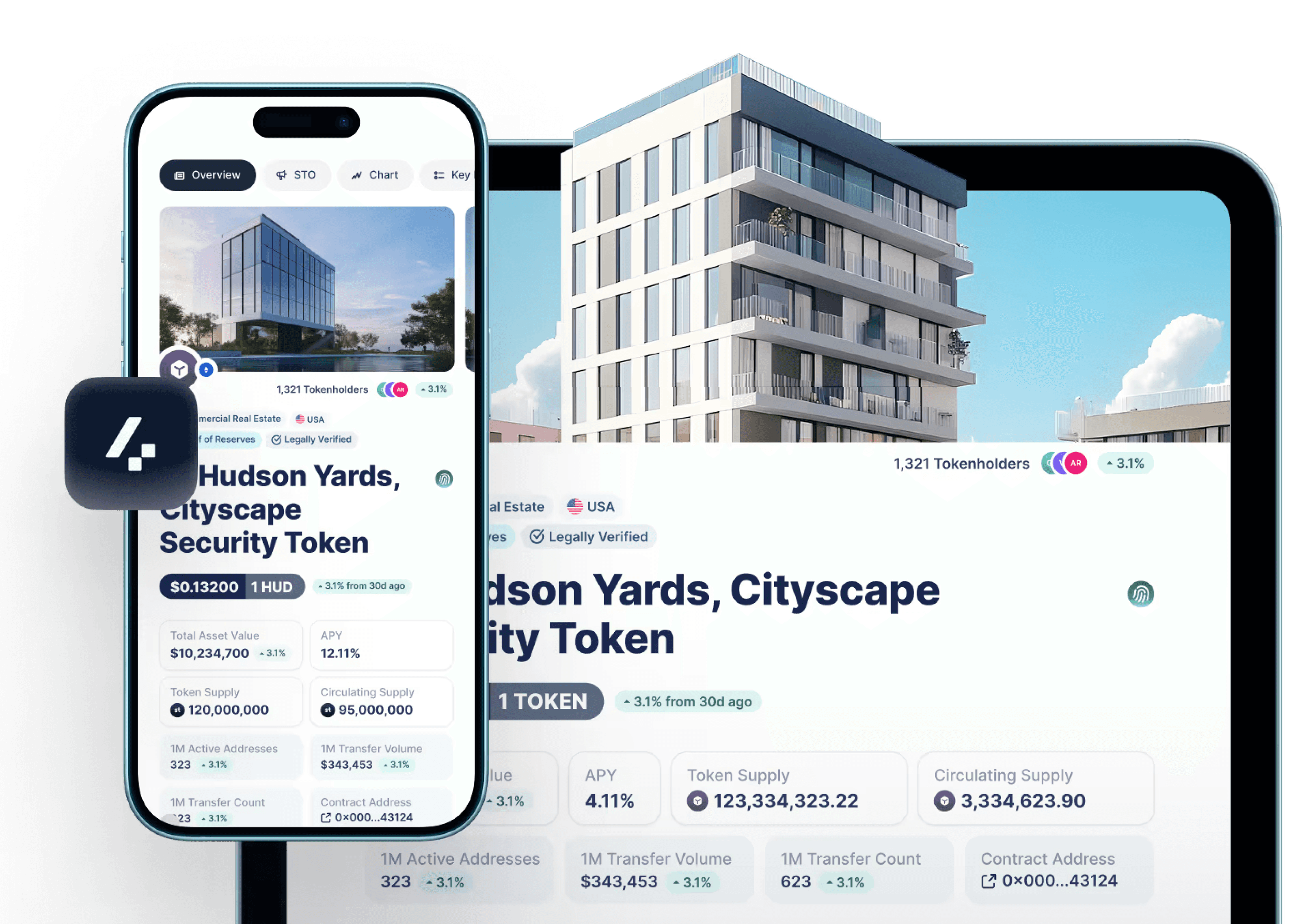
Liquistate lets businesses and investors easily issue, manage, and trade tokenized assets. Our white-label platform gives you all the tools to launch and scale digital securities with confidence.


© 2026 LiquiState Business Corporation. "LiquiState" and the LiquiState logo are registered trademarks of the company.
Disclaimer: This website is operated by LiquiState, a provider of blockchain-based technology solutions for digital assets, including its white-label LiquiState Platform. LiquiState is not a registered dealer, portfolio manager, investment adviser, or financial advisor. The company does not engage in the business of trading, advising, or dealing in securities or derivatives and is not registered with, nor approved by, any securities or financial regulatory authority in any jurisdiction.
LiquiState does not provide investment or legal advice, analysis, endorsements, or recommendations regarding any issuers, securities, or digital assets. No information on this website constitutes, or should be interpreted as, an offer, solicitation, or distribution of securities, nor as investment advice or investment recommendations by LiquiState or its affiliates.
All securities offerings and digital assets facilitated through LiquiState’s technology are issued and managed solely by the applicable issuer. LiquiState does not custody or hold any digital securities or digital assets.
All product and company names are trademarks or registered trademarks of their respective holders. LiquiState’s use of those trademarks does not imply any affiliation with or endorsement by them.